

Uzbekistan and UNESCO
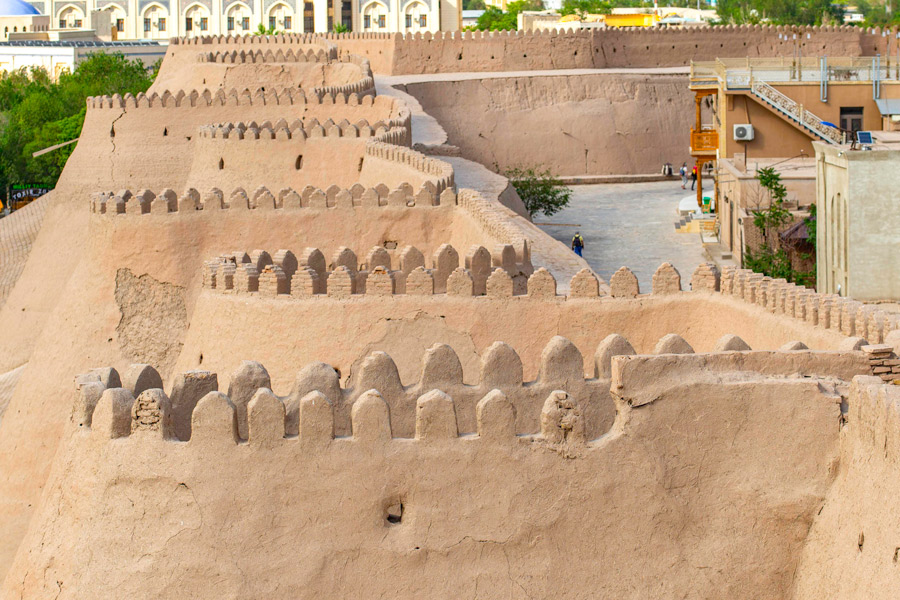
The rich history and culture of Uzbekistan are highly appreciated by the world community. The ancient fortress of Ichan-Kala, located in modern Khiva, was inscribed on the UNESCO World Heritage List in 1990.
Uzbekistan became a member of the United Nations Educational, Scientific, and Cultural Organization (UNESCO) in 1993.
In 2022, Uzbekistan was elected to the UNESCO Intergovernmental Committee for the Safeguarding of the Intangible Cultural Heritage and served on it until June 2026.
World Heritage Sites in Uzbekistan
Today, Uzbekistan has eight properties inscribed on the UNESCO World Heritage List:
- Ichan-Kala fortress in Khiva (included in the UNESCO list in 1990);
- Historical center of the city of Bukhara (included in 1993);
- Historical center of Shakhrisabz (included in 2000);
- Samarkand - crossroads of cultures (included in 2001);
- Western Tien Shan (included in 2016);
- Turanian Deserts in the Temperate Region (included in 2023);
- Zarafshan-Karakum Corridor (since 2023);
- Tashkent Modernist Architecture. Modernity and Tradition in Central Asia (inscribed in 2026).
Itchan-Kala
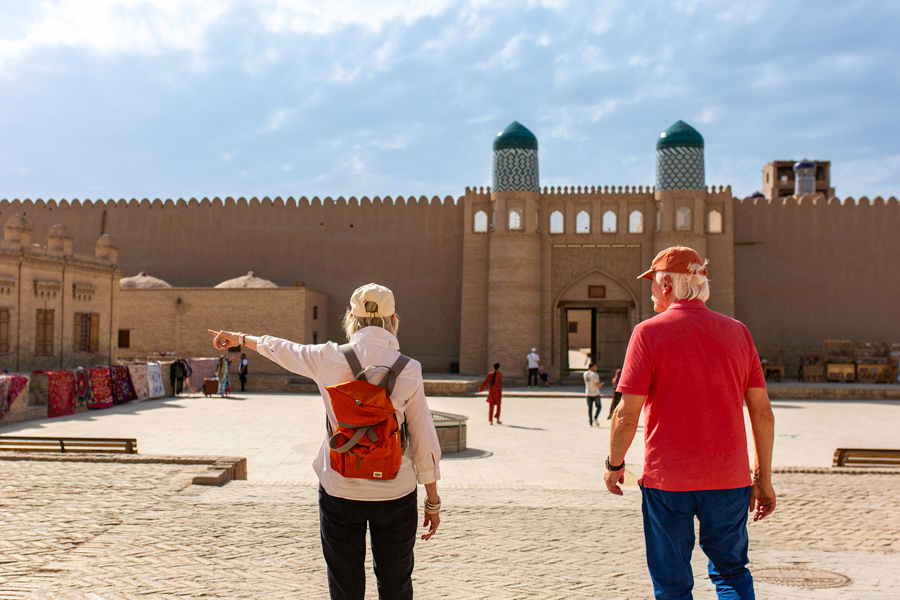
Itchan-Kala is the inner city of Khiva, which has a 2000-year history. The fortress of Ichan-Kala is one of the best monuments of Central Asian architecture. Famous buildings - Kunya-Ark, Kalta-Minor and Islam-Khoja minarets, Tash-Khauli Palace and Juma Mosque, attract many tourists.
Historical Center of the City of Bukhara
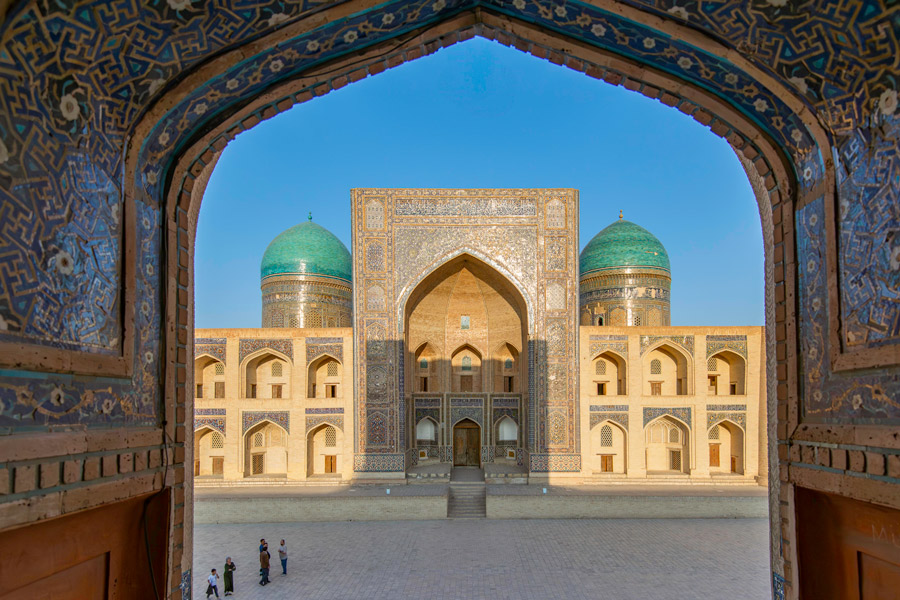
Of all the Central Asian medieval cities, Bukhara is the most complete example, where the urban planning of the 10th-17th centuries has been preserved almost unchanged. The most remarkable objects of the center of Bukhara are the masterpiece of Muslim architecture of the X century, the tomb of Ismail Samani, the Poi-Kalyan minaret of the XI century, the city citadel of the XVI century, the Magoki-Attari mosque and the Abdulaziz-khan madrasah of the XVII century, as well as Lyabi-Hauz and much more.
The historical center of Shakhrisabz
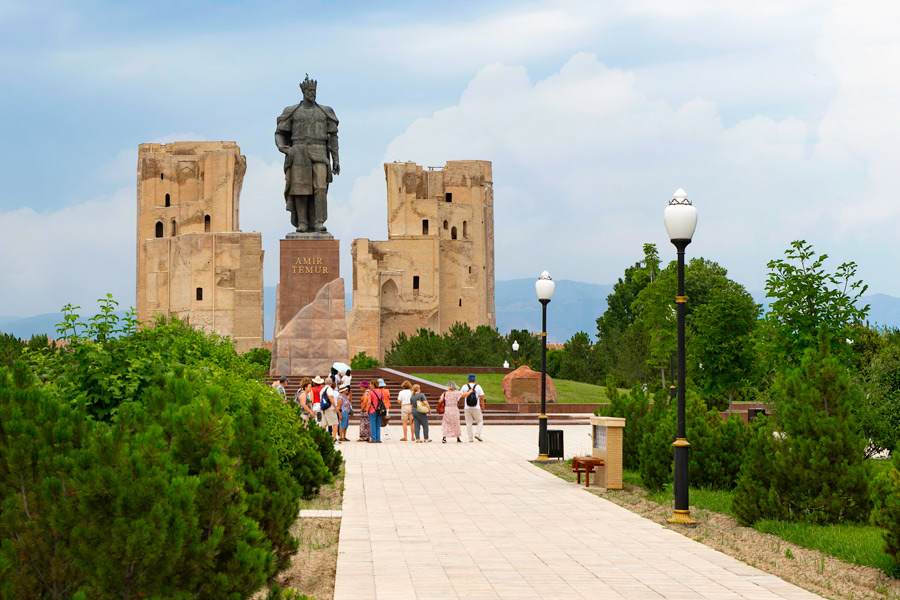
City represents the preserved architectural works of the Middle Ages. Here Amir Timur built the famous Ak-Saray Palace and Dorus Saodat, the tomb in which he wanted to be buried. The complex also includes mausoleums, mosques, and medieval quarters.
Samarkand - Crossroads of Cultures
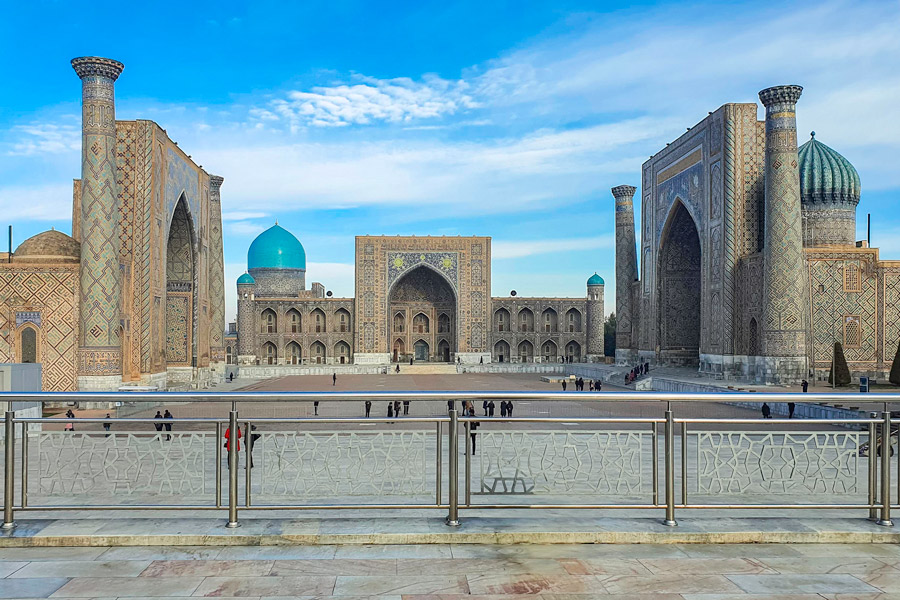
The most famous architectural monuments of the old part of Samarkand are Registan Square with three madrasahs, the Gur-Emir mausoleum (where Amir Timur is buried), the city of the dead Shakhi-Zinda, the Bibi-Khanum Mosque and the remains of one of the most significant medieval observatories.
The Western Tien Shan
Western Tien-Shan is a transnational UNESCO World Heritage property shared by Uzbekistan, Kazakhstan and Kyrgyzstan. The most famous natural point on the map of the Western Tien Shan is the Chatkal Nature Reserve, located in the Tashkent region. On this territory is the Ugam-Chatkal National Park with rich flora and fauna.
Turanian Deserts in the Temperate Region
The Turanian Deserts in the Temperate Region, spanning over 1,500 kilometers from east to west, are rich and diverse ecosystems. Comprising 14 distinct sections, each contributes uniquely to the overall biodiversity of the region. These deserts are recognized and protected by UNESCO, not just in Uzbekistan but also in Kazakhstan and Turkmenistan. The Uzbek part of the property is located in Karakalpakstan.
Zarafshan-Karakum Corridor
Regarding the Zarafshan-Karakum corridor, it holds significant historical importance as a key segment of the Great Silk Road, traversing through what is now modern Central Asia. Also under UNESCO protection, particularly in Tajikistan and Turkmenistan, this corridor stretches 866 kilometers along the Zarafshan River, reaching all the way to the Merv Oasis. From this corridor, numerous routes branched off, leading to various bustling trade cities of the time.
Tashkent Modernist Architecture. Modernity and Tradition in Central Asia
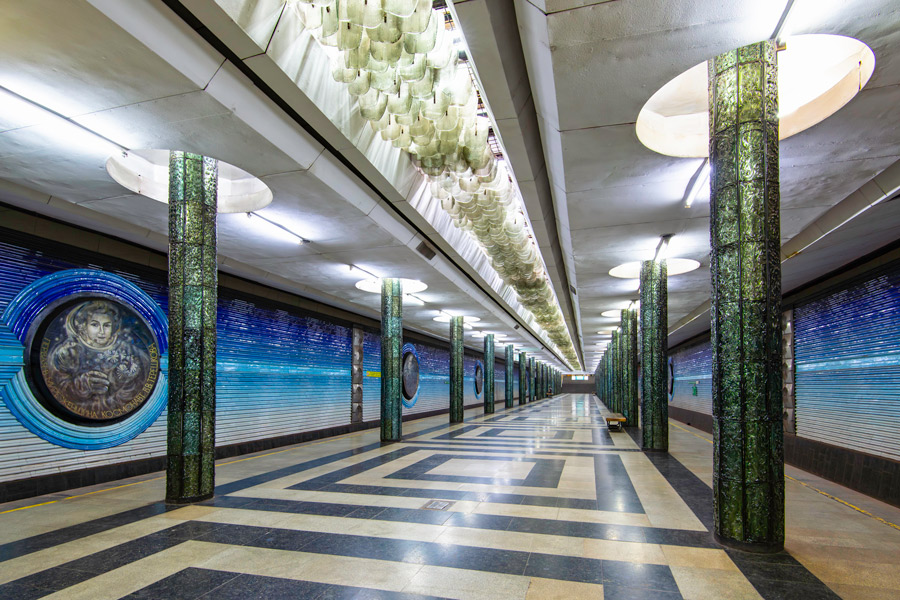
Tashkent modernism represents a distinctive chapter in the city’s architectural history, spanning the period from the late 1960s to the early 1990s. These buildings bear witness to Tashkent’s rebirth after the devastating earthquake of 1966. Thousands of workers took part in rebuilding the city, while leading architects, engineers and artists from across the Soviet Union helped shape its new urban landscape.
Ten of Tashkent’s best-preserved and most representative modernist landmarks were inscribed on the UNESCO World Heritage List:
- Chorsu Market;
- State Museum of History;
- State Museum of Arts;
- Peoples’ Friendship Palace;
- Central Exhibition Hall of the Academy of Arts;
- Zhemchug Residential Building;
- Kosmonavtlar Metro Station;
- State Circus;
- Alisher Navoi Cinema Palace;
- Big Solar Furnace.
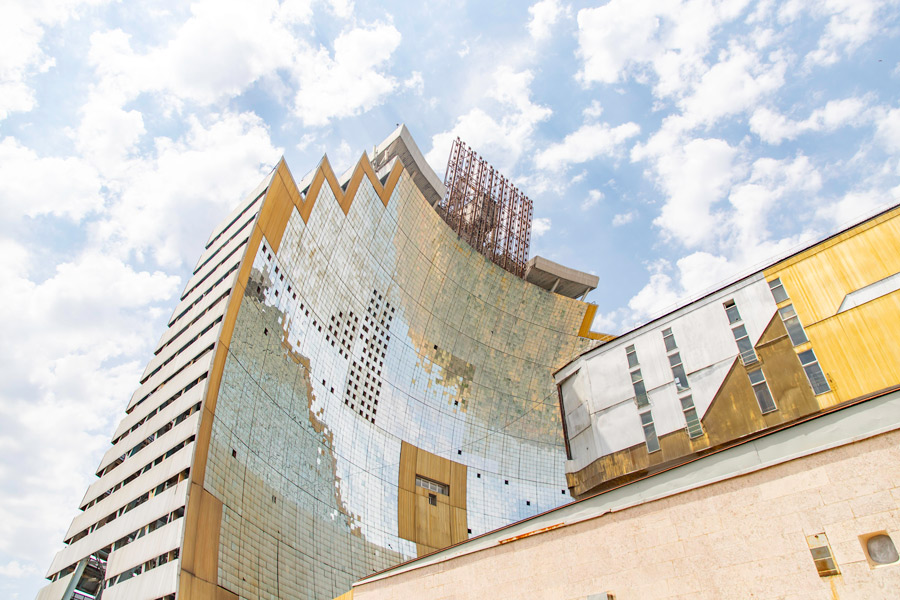
Each also has a distinctive architectural identity, combining modernist forms with traditional Uzbek motifs. All remain in use and continue to play an active role in the life of the city.
- Ak Astana-baba (mausoleum) (added in 1996). This 10th–11th-century mausoleum stands in an ancient cemetery in Surkhandarya Region. It was built in honor of Abu Hurayra, a revered companion of the Prophet Muhammad.
- Khanbandi (dam) (added in 1996) is one of the oldest surviving dams in Uzbekistan. Located in Jizzakh Region, it dates to the 10th–13th centuries. The dam once held back a reservoir about 1.5 kilometers long.
- Complex of Sheikh Mukhtar-Vali (mausoleum) (added in 1996). Located in Khorezm Region, the mausoleum was built over the grave of Mukhtar Vali, a Muslim spiritual teacher who died in 1287. The monument is distinguished by its multi-domed design and carved wooden details.
- Minaret in Vobkent (added in 2008) is a symbol of the town and one of the finest examples of Karakhanid architecture. Standing more than 40 meters high, it is similar in form to the Kalyan Minaret in Bukhara but has its own distinctive decoration. It was built in 1196–1197 and has survived largely intact.
- Desert Castles of Ancient Khorezm (added in 2008). This nomination brings together ancient fortresses of Khorezm preserved in the deserts of Karakalpakstan. They include Toprak-Kala, Ayaz-Kala, Koy-Krylgan-Kala and Bolshoi Guldursun.
- Khazarasp (added in 2008). A settlement arose here in the middle of the 1st millennium BC, and Khazarasp later developed into a major fortified trading center of Khorezm. Parts of the citadel, defensive walls and towers of the ancient city have survived.
- Mir-Sayid Bakhrom Mausoleum (added in 2008) is located in Navoi Region and dates from the 10th–11th centuries. This small baked-brick structure retains a portal with geometric decoration and a domed design.
- Rabat-i-Malik Caravanserai (added in 2008) was built in the 11th century as a fortified country residence of the Karakhanid rulers and was later used as a caravanserai for travelers and merchant caravans. The best-preserved part of the once extensive complex is its monumental entrance portal with carved decoration.
- Bahouddin Naqshbandi Architectural Complex (added in 2008). The memorial complex developed around the tomb of the renowned Sufi teacher Bahouddin Naqshbandi, who died in 1389. His mausoleum is often referred to as the “Mecca of Central Asia.”
- Chor-Bakr (added in 2008) is located on the outskirts of Bukhara. The necropolis began to take shape in the 10th century around the burial place of Abu-Bakr-Said, a religious figure believed to be a descendant of the Prophet Muhammad. Family tombs, a mosque, a Sufi lodge and walled courtyards were later added to the complex.
- Chashma-Ayub Mausoleum (added in 2008) is located in Bukhara and developed in several stages between the 11th and 15th centuries. The monument is known for its sacred spring, traditionally associated with the Prophet Job (Ayub).
- Varakhsha (added in 2008). The settlement was founded in the 4th–3rd centuries BC and became a residence of the rulers of Bukhara in the early Middle Ages. The site preserves the ruins of a palace with wall paintings dating from the late 7th to early 8th century.
- Poykent (added in 2008). This ancient settlement is located in Bukhara Region. Founded in the 4th century BC, it gradually developed into a major trading city. Archaeologists have uncovered fortifications, residential quarters, craft workshops and caravanserais.
- Zarautsoy Rock Paintings (added in 2008). The paintings are located in the Zaraut-Kamar grotto in Surkhandarya Region. The earliest images are generally dated to the Mesolithic and Neolithic periods, while later examples belong to the Middle Ages. They depict bulls, goitered gazelles, human figures and hunting scenes.
- Ancient Termez (added in 2008). The city emerged in the 4th–3rd centuries BC and remained an important center in southern Central Asia for many centuries. The site preserves ruins from the ancient period, Buddhist monasteries and structures dating from the Islamic era.
- Siypantosh Rock Paintings (added in 2008). Located in Kashkadarya Region, Siypantosh is considered one of the earliest rock-art complexes in Central Asia. The site preserves ancient drawings and engravings depicting animals and geometric symbols.
- Andijan (added in 2008) is one of the oldest cities in Uzbekistan, with a history spanning more than 2,500 years.
- Ancient Pap (added in 2008). This archaeological site in Namangan Region preserves cultural layers dating from the 1st to the 8th centuries AD. The finds help trace the development of one of the early urban centers of the Fergana Valley.
- Akhsikent (added in 2008). The city was founded in the 3rd–2nd centuries BC and later became one of the largest centers of the Fergana Valley. It was destroyed during the Mongol invasion in the early 13th century. Today, the ruins of its citadel and city fortifications remain.
- Historic Center of Kokand (added in 2008). The earliest records of Kokand date to the 2nd century BC, although the city’s best-known monuments are associated with the Kokand Khanate of the 18th–19th centuries. Its palaces, mosques and madrasahs reflect the architectural traditions of the Fergana Valley.
- Arab-Ata Mausoleum (added in 2008). This 10th-century mausoleum in Samarkand Region is an early example of the portal-and-dome mausoleum tradition of Central Asia.
- Abdulkhan Bandi Dam (added in 2008) was built in 1580 by order of the Bukhara ruler Abdullah Khan II. It is located in Farish District of Jizzakh Region, near the Nurata Range.
- Shahruhiya (added in 2008) is the site of an ancient city in Tashkent Region on the banks of the Syr Darya. The city existed from around the 3rd–4th centuries AD until the 18th century and was an important Silk Road trading center. Remains of fortifications, residential areas and craft quarters have survived.
- Kanka (added in 2008) is the site of an ancient city about 80 kilometers southeast of Tashkent. Kanka emerged in the 4th century BC and was the capital of the ancient state of Kangju. Its citadel, massive fortifications and remains of urban quarters have survived.
- Silk Roads Sites in Uzbekistan (added in 2010). This serial nomination brings together 18 sites across different regions of the country, including ancient cities, a caravanserai, mausoleums, a minaret and other monuments. Together they illustrate different aspects of life along the trade routes of Central Asia.
- Tashkent Mahallas (added in 2021). Mahallas are historic residential neighborhoods of Tashkent, characterized by narrow streets, houses with inner courtyards and shared community spaces. Their layout preserves traditions of urban life that developed over many generations.
- Silk Roads: Fergana-Syrdarya Corridor (added in 2023). The nomination brings together archaeological sites, religious complexes and other monuments in Tashkent, Tashkent Region and the Fergana Valley. They lie along one of the important Silk Road routes through the Syr Darya Valley.
- Zaamin Mountains (added in 2024). The nomination includes Zaamin State Nature Reserve and Zaamin National Park on the northern slopes of the Turkestan Range in Jizzakh Region. The area is characterized by juniper forests, mountain gorges and high-altitude landscapes.
- Hissar Mountains (added in 2024) are located in Kashkadarya Region. The nomination covers one of the highest mountain regions in Uzbekistan. It features glaciers, deep gorges, waterfalls and the famous Amir Timur Cave.
- Shakhimardan Mountains (added in 2024). Shakhimardan lies in a mountainous exclave of Uzbekistan surrounded by Kyrgyzstan. River valleys, juniper-covered slopes and high ridges shape the landscape of this part of Fergana Region.
- Sarmishsay petroglyphs (added in 2024). Around 10,000 rock images have been recorded in the Sarmishsay Gorge in Navoi Region, most of them dating from the Bronze Age. They depict animals, people, hunting scenes and rituals.
- Baysun (added in 2024) covers a mountainous area of Surkhandarya Region with canyons, caves and alpine meadows. It includes Teshik-Tash Cave, where the well-known burial of a Neanderthal child was discovered.
- Kugitang Mountains (added in 2024). Kugitang lies in the far south of Uzbekistan, along the border with Turkmenistan. Its mountain gorges and the territory of Surkhan State Nature Reserve provide habitat for rare wildlife.
- Nuratau Mountains (added in 2024). The Nuratau Mountains include the Nuratau, Aktau and Karatau ranges. Mountain landscapes meet desert plains here, supporting both mountain and desert plant species.
- Karst, Canyons and Caves of Kugitang (added in 2025). This transboundary area shared by Uzbekistan and Turkmenistan is distinguished by an extensive limestone massif with deep canyons and a vast network of karst caves.
- Chilpyk the Tower of Silence (added in 2025). Chilpyk, also known as Shylpyk, is an ancient tower where Zoroastrian funerary rites were once performed. It stands on a hilltop about 43 kilometers south of Nukus. Its main phases of construction and use date from the 1st–4th and 9th–11th centuries.
- Ancient towns and fortresses of the Aral Sea region (added in 2025). The nomination brings together archaeological sites in Karakalpakstan dating from the 4th century BC to the 12th century AD. They include Akshakhan-Kala, Ayaz-Kala, Toprak-Kala and other ancient settlements associated with the history of Khorezm.
If you are going to visit Uzbekistan, be sure to plan a visit to the historical sites included in the UNESCO World Heritage List. Here you can plunge into the culture of the medieval East and enjoy the beauties of nature. In addition you may learn about UNESCO Intangible Cultural Heritage of Uzbekistan.